Health & Safety Library

Fire Prevention

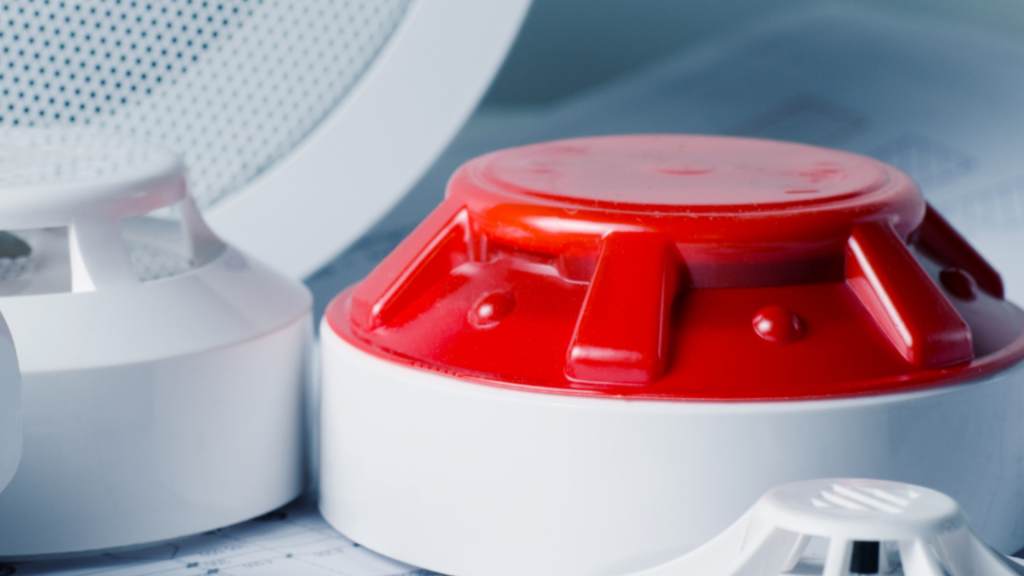
Fire prevention is crucial for ensuring safety in homes, workplaces, and public spaces. By understanding fire risks and implementing preventive measures.

Read More


Electrical Safety

Electrical Safety

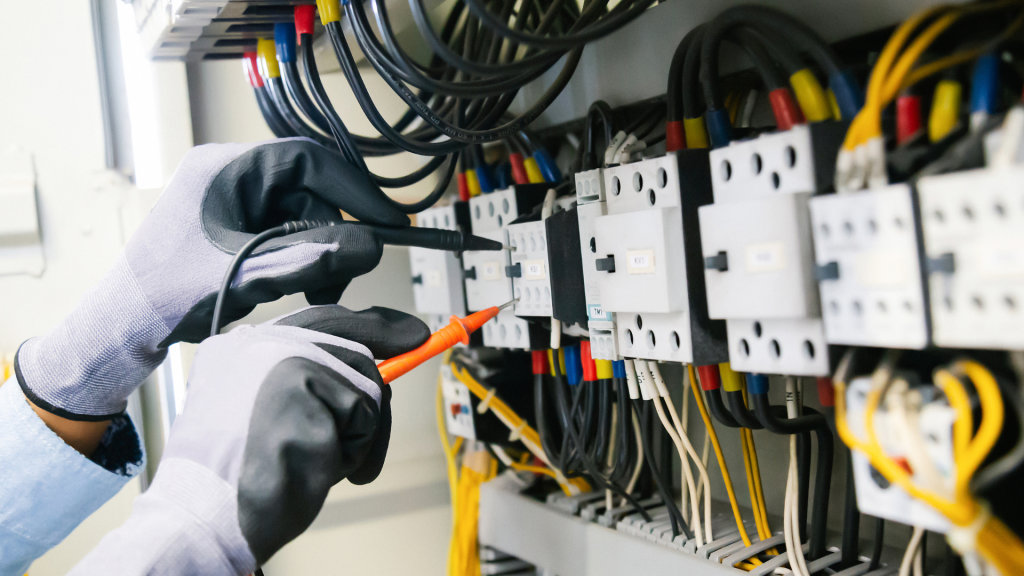
Electricity is part of our lives. We use it from the moment we wake up and throughout the day. As a result, we sometimes forget how powerful and dangerous it can be.

Read More


Slips, Trips & Falls

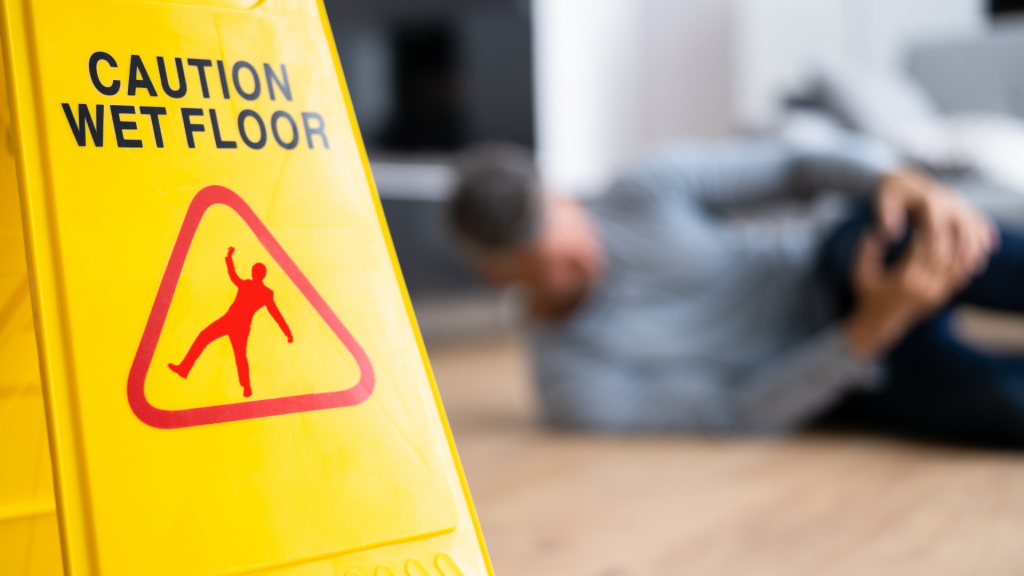
Slips, trips, and falls are among the most common hazards in the workplace. They put many workers at risk of sprains, strains, cuts, bruises, fractures, and other injuries. At worst, they can also lead to death, especially in high-risk occupations such as construction. However, with adequate training and safety practices, companies can keep their personnel safe from these hazards.

Read More


Hazard Awareness

Being aware of hazards within your home is the first step to preventing them. Some of the most common hazards at home include fire, poisoning and allergies. There may also be risks posed by your home’s contents, such as falls, choking, cuts and burns. This is not an exhaustive list, so you may find it useful to do your own research and conduct a risk assessment of your home.

Read More


Legionnaires’ Disease

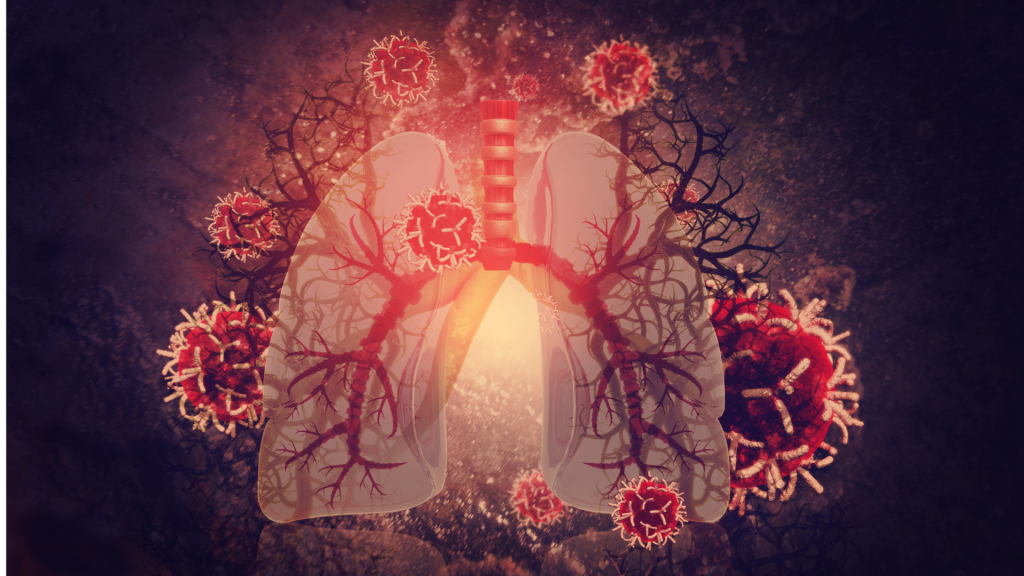
Legionnaires’ disease is a lung infection you can get from inhaling droplets of water from things like air conditioning or hot tubs. It’s uncommon but it can be very serious. You can get Legionnaires’ disease if you breathe in tiny droplets of water containing bacteria that cause the infection. It’s usually caught in places like hotels, hospitals or offices where the bacteria have got into the water supply. It’s less common to catch it at home.

Read More


Be Battery Aware

Batteries and items containing batteries should not go in any of your bins at home. Old batteries may seem ‘dead’ but they can still cause fires during the bin collection or waste sorting process. With the rising e-waste streams, hidden batteries are found in many items in daily life including laptops, mobile phones, electric toys, Bluetooth devices, shavers, electric toothbrushes, power bank chargers, vapes and more.

Read more


Asbestos

Asbestos

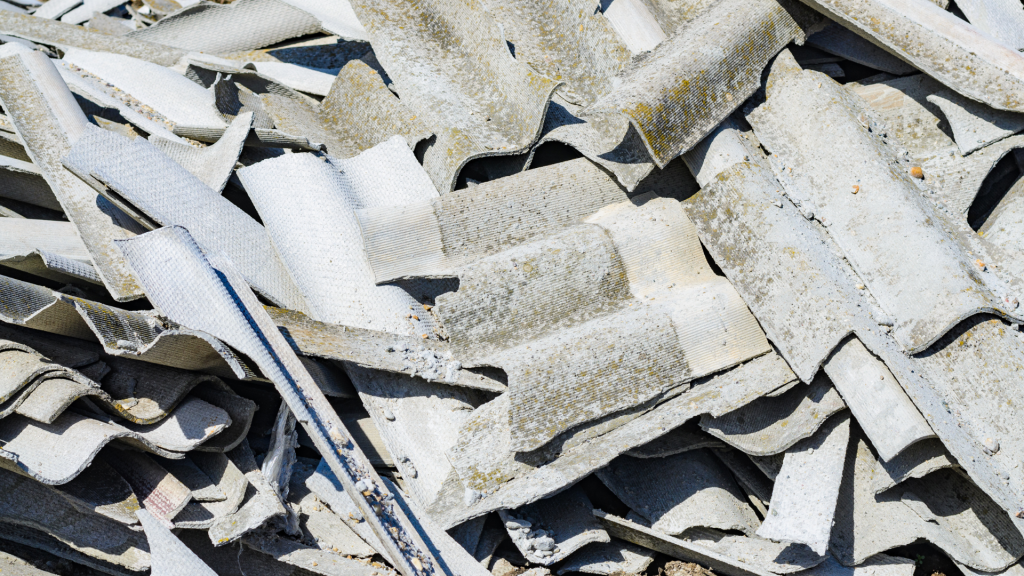
Asbestos is a general name given to several naturally occurring fibrous minerals that have crystallised to form fibres. Asbestos fibres do not dissolve in water or evaporate, they are resistant to heat, fire, chemical and biological degradation and are mechanically strong.

Read more


First Aid

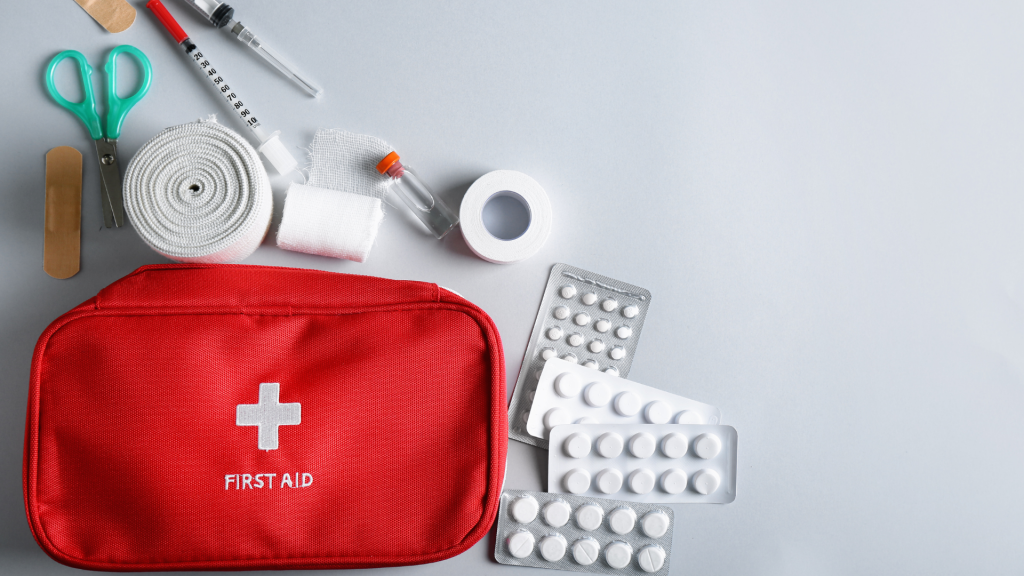
Every year in the UK, thousands of people die or are seriously injured in incidents. Many deaths could be prevented if first aid was given before emergency services arrive.

Read more


Smoking & Fire Safety

Smoking & Fire Safety

Smoking is one of the leading causes of fire-related deaths, and the health risks are well-known. If you smoke and find it hard to quit, you can stay safer by learning how to reduce fire risk for smokers below. You can also help loved ones who smoke by sharing the information.

Read more


Be Battery Aware

Batteries and items containing batteries should not go in any of your bins at home. Old batteries may seem ‘dead’ but they can still cause fires during the bin collection or waste sorting process.

With the rising e-waste streams, hidden batteries are found in many items in daily life including laptops, mobile phones, electric toys, Bluetooth devices, shavers, electric toothbrushes, power bank chargers, vapes and more. The campaign will also raise awareness about hidden batteries so that residents can dispose of them safely as well.

Key messages

  • Be battery aware when recycling – everything with a battery, plug or cable has to be disposed of safely at a recycling point.
  • Never put old batteries or electrical items in any of your bins at home. They can cause fires if crushed during bin collection or waste sorting.
  • Take old batteries and items containing batteries to a household recycling centre (HWRC) or look for recycling points such as local supermarkets, shops, or your workplace.
  • Check items for hidden batteries before recycling.
  • Return vapes to where you bought them as retailers are obligated to provide a take-back scheme.

Read more: https://www.manchesterfire.gov.uk/your-safety/campaigns/be-battery-aware/

Asbestos

Asbestos is a general name given to several naturally occurring fibrous minerals that have crystallised to form fibres. Asbestos fibres do not dissolve in water or evaporate, they are resistant to heat, fire, chemical and biological degradation and are mechanically strong.

Asbestos is generally divided into two sub-groups; serpentine and amphiboles. Serpentine asbestos (chrysotile or white asbestos) was the most commonly used type of asbestos.

Chrysotile asbestos fibres are soft, flexible and curved and far less hazardous than the amphibole type. Amphibole fibres (crocidolite-blue asbestos, amosite-brown asbestos, tremolite, actinolite and anthophyllite) are brittle fibres and are often rod- or needle-like in appearance. It is this form that is more hazardous to health. Crocidolite was the most commonly used amphibole asbestos in the past.

Uses of asbestos

The properties of asbestos made it an ideal material for use in a number of products, including insulation material for buildings, boilers and pipes; car brakes and floor tiles, insulating board to protect buildings and ships against fire; asbestos cement for roofing sheets and pipes.

Due to the risks to health following inhalation exposure to asbestos the importation of blue and brown asbestos has been banned in the UK since 1985. This ban was extended to include white asbestos in 1999.

How asbestos gets into the environment

Asbestos is widespread in the environment. It may enter the atmosphere due to the natural weathering of asbestos-containing ores or damage and breakdown of asbestos-containing products including insulation, car brakes and clutches, ceiling and floor tiles and cement.

Exposure to asbestos

People may come into contact with asbestos from existing asbestos-containing materials in buildings and products. If they are intact, they pose very little risk. However, if asbestos containing products are damaged in some way, fibres may be released. Caution should be taken when doing DIY work in buildings containing asbestos. Find further advice on asbestos in the home.

People are most likely to be exposed to asbestos fibres by breathing in fibres that are suspended in air.

People also may swallow small amounts of the fibres if the asbestos enters the soil or drinking water. Although asbestos does not dissolve, fibres may enter water after being eroded from natural sources, from asbestos-cement or from asbestos-containing filters. However, there is no evidence the ingestion of asbestos fibres is hazardous to health.

Those involved in demolition work, asbestos abatement, building repair and maintenance may be exposed to higher levels of asbestos as disturbing such materials releases fibres into the air.

How exposure to asbestos could affect your health

The presence of asbestos in the environment does not always lead to exposure as you must come into contact with the fibres. You may be exposed by breathing, eating, or drinking the substance or by skin contact. Following exposure to any hazardous chemical, the adverse health effects that you may encounter depend on several factors, including the amount to which you are exposed (dose), the duration of exposure, the way you are exposed, the form of asbestos and if you were exposed to any other chemicals.

All forms of asbestos fibres are hazardous as they can induce cancer following inhalation exposure, but amphibole forms of asbestos (including blue and brown) are more hazardous to health than chrysotile (white).

Breathing in high concentrations of asbestos for a long period of time mainly affects the lungs, causing a disease called asbestosis where breathing becomes difficult and the heart enlarges. Asbestosis may take decades to develop. Asbestosis sufferers are at an increased risk of cancer. Exposure to lower concentrations of asbestos over time may result in a general (diffuse pleural thickening) or localised (pleural plaques) thickening of the lung lining.

Warts and corns may form around asbestos fibres that become embedded in the skin. The World Health Organization (WHO) has stated that there is no consistent evidence that ingested asbestos is hazardous to health.

Asbestos and cancer

The International Agency for Research on Cancer has classified all forms of asbestos as being carcinogenic to humans. Asbestos causes mesothelioma (type of cancer that forms on the protective tissue that covers the lungs or the abdomen) and cancer of the lung, larynx (voice box) and ovary.

Vulnerable people

People with breathing problems such as asthma may be more sensitive to the effects of asbestos.

Pregnancy and the unborn child

Several experimental studies have suggested that asbestos does not cause adverse pregnancy outcomes or birth defects.

Children

It is not possible to say whether children are more susceptible to asbestos-related injury. However, due to the increased life expectancy of children compared to adults, there is an increased lifetime risk of mesothelioma as a result of the long period of time this disease takes to develop. They are therefore more vulnerable to developing mesothelioma than an adult exposed to the same amount.

What to do if you are exposed to asbestos

Intact asbestos materials in a place where they are unlikely to be disturbed should not cause any harm. If you come into contact with asbestos fibres, you should remove yourself from the source of exposure. If you have got asbestos fibres on your skin and clothes do not shake or brush the fibres off as this will make them airborne and prone to being inhaled. Remove all visible dust and fibres from the body, clothing and footwear by wet wiping with a damp cloth using a gentle patting action. Remove any contaminated clothing (not over the head) and place in a bag with the damp cloth.

Contact your local authority for advice on disposal of the clothing.

If you have any health concerns regarding exposure to asbestos seek guidance from your GP or contact NHS 111.

If you find asbestos in your home

Asbestos may be present in any house or building built before the year 2000 as it was widely used in a variety of building materials.

The UK Health Security Agency (UKHSA) does not recommend the DIY removal of asbestos without advice. If you find any asbestos which requires removal, you should contact your local council for more information about asbestos and its disposal

Read more  https://www.gov.uk/government/publications/asbestos-properties-incident-management-and-toxicology/asbestos-general-information

First Aid

Every year in the UK, thousands of people die or are seriously injured in incidents. Many deaths could be prevented if first aid was given before emergency services arrive.

What to do

If someone is injured, you should:

  • first check that you and the injured person aren’t in any danger, and, if possible, make the situation safe
  • if necessary, dial 999 for an ambulance when it’s safe to do so
  • carry out basic first aid

Find out what to do after an incident

If someone is unconscious and breathing

If someone is unconscious but breathing, and has no other injuries that would stop them being moved, place them in the recovery position until help arrives.

Keep them under observation to ensure they continue to breathe normally.

If someone is unconscious and not breathing

If someone is not breathing normally, call 999 and start cardiopulmonary resuscitation (CPR) straight away.

Find out more about CPR

Common accidents and emergencies

Here are some of the most common injuries that may need emergency treatment in the UK and information about how to deal with them.

Anaphylaxis

Anaphylaxis (or anaphylactic shock) is a severe allergic reaction that can occur after an insect sting or eating certain foods.

The adverse reaction can be very fast, occurring within seconds or minutes of coming into contact with the substance the person is allergic to (allergen).

During anaphylactic shock, it may be difficult for the person to breathe, as their tongue and throat may swell, obstructing their airway.

Call 999 immediately if you think someone is experiencing anaphylactic shock.

Check if the person is carrying any medication. Some people who know they have severe allergies may carry an adrenaline self-injector, which is a type of pre-loaded syringe.

You can either help the person administer their medication or, if you’re trained to do so, give it to them yourself.

After the injection, continue to look after the person until medical help arrives.

All casualties who have had an intramuscular or subcutaneous (under the skin) injection of adrenaline must be seen and medically checked by a healthcare professional as soon as possible after the injection has been given.

Make sure they’re comfortable and can breathe as best they can while waiting for medical help to arrive.

If they’re conscious, sitting upright is normally the best position for them.

Find out how to treat anaphylaxis


Bleeding heavily

If someone is bleeding heavily, the main aim is to prevent further blood loss and minimise the effects of shock.

First, dial 999 and ask for an ambulance as soon as possible.

If you have disposable gloves, use them to reduce the risk of any infection being passed on.

Check that there’s nothing embedded in the wound. If there is, take care not to press down on the object.

Instead, press firmly on either side of the object and build up padding around it before bandaging to avoid putting pressure on the object itself.

Do not try to remove it because it may be helping to slow down the bleeding.

If nothing is embedded:

  • Apply and maintain pressure to the wound with your gloved hand, using a clean pad or dressing if possible. Continue to apply pressure until the bleeding stops.
  • Use a clean dressing or any clean, soft material to bandage the wound firmly.
  • If bleeding continues through the pad, apply pressure to the wound until the bleeding stops, and then apply another pad over the top and bandage it in place. Do not remove the original pad or dressing, but continue to check that the bleeding has stopped.

If a body part, such as a finger, has been severed, place it in a plastic bag or wrap it in cling film. Do not wash the severed limb.

Wrap the package in soft fabric and place in a container of crushed ice. Do not let the limb touch the ice.

Make sure the severed limb goes with the patient to hospital.

Always seek medical help for bleeding, unless it’s minor.

Find out how to treat cuts and grazes and how to treat nosebleeds.

Burns and scalds

If someone has a burn or scald:

  • Cool the burn as quickly as possible with cool running water for at least 20 minutes, or until the pain is relieved.
  • Call 999 or seek medical help, if needed.
  • While cooling the burn, and before the area begins to swell, carefully remove any clothing or jewellery, unless it’s attached to the skin.
  • If you’re cooling a large burnt area, particularly in babies, children and elderly people, be aware that it may cause hypothermia (it may be necessary to stop cooling the burn to avoid hypothermia).
  • If the burn has cooled, cover it loosely with cling film. If cling film isn’t available, use a clean, dry dressing or non-fluffy material. Do not wrap the burn tightly as swelling may lead to further injury.
  • Do not apply creams, lotions or sprays to the burn.

If you are not sure if medical help is needed or what to do next, call 111 or get help from 111 online.

Find out how to treat burns and scalds


Chemical burns

For chemical burns, wear protective gloves, remove any affected clothing, and rinse the burn with cool running water for at least 20 minutes to remove the chemical.

If possible, determine the cause of the injury.

In certain situations where a chemical is regularly handled, a specific chemical antidote may be available to use.

Be careful not to contaminate and injure yourself with the chemical, and wear protective clothing if necessary.

Call 999 for immediate medical help.


Choking

The following information is for choking in adults. There is separate advice on how to stop a child from choking.


Mild choking

If the airway is only partly blocked, the person will usually be able to speak, cry, cough or breathe.

In situations like this, a person will usually be able to clear the blockage themselves.

If choking is mild:

  • Encourage the person to cough to try to clear the blockage.
  • Ask them to try to spit out the object if it’s in their mouth.
  • Do not put your fingers in their mouth if you can’t see the object, as you risk pushing it further down their mouth.

If coughing doesn’t work, start back blows.


Severe choking

If choking is severe, the person won’t be able to speak, cry, cough or breathe, and without help they’ll eventually become unconscious. If coughing doesn’t work start back blows.


How to do back blows

To help an adult or child over 1 year old:

  • Stand behind the person and slightly to one side. Support their chest with 1 hand. Lean the person forward so the object blocking their airway will come out of their mouth, rather than moving further down.
  • Give up to 5 sharp blows between the person’s shoulder blades with the heel of your hand (the heel is between the palm of your hand and your wrist).
  • Check if the blockage has cleared.
  • If not, give up to 5 abdominal thrusts.

Do not give abdominal thrusts to babies under 1 year old or to pregnant women.

To perform abdominal thrusts on a person who is severely choking and isn’t in one of the above groups:

  • Stand behind the person who is choking.
  • Place your arms around their waist and bend them well forward.
  • Clench 1 fist and place it just above the person’s belly button.
  • Place your other hand on top of your fist and pull sharply inwards and upwards.
  • Repeat this up to 5 times.

The aim is to get the obstruction out with each chest thrust, rather than necessarily doing all 5.

If the person’s airway is still blocked after trying back blows and abdominal thrusts:

  • Call 999 and ask for an ambulance. Tell the 999 operator that the person is choking.
  • Continue with the cycles of 5 back blows and 5 abdominal thrusts until help arrives.

The person choking should always be seen by a healthcare professional afterwards to check for any injuries or small pieces of the obstruction that remain.


Drowning

If someone is in difficulty in water, don’t enter the water unless it’s safe to do so. Don’t put yourself at risk.

Once the person is on land, you need to check if they’re breathing. Ask someone to call 999 for medical help.

If they’re not breathing, open the airway and give 5 initial rescue breaths before starting CPR.

Find out how to give CPR, including rescue breaths.

If the person is unconscious but still breathing, put them into the recovery position with their head lower than their body and call an ambulance immediately.

Continue watching the patient to ensure they don’t stop breathing and continue to breathe normally.


Electric shock (domestic)

If someone has had an electric shock, switch off the electrical current at the mains to break the contact between the person and the electrical supply.

If you can’t reach the mains supply:

  • Do not go near or touch the person until you’re sure the electrical supply has been switched off.
  • Once the power supply has been switched off, and if the person isn’t breathing, dial 999 to for an ambulance.

Afterwards, seek medical help.

Fractures

It can be difficult to tell if a person has a broken bone or a joint, as opposed to a simple muscular injury. If you’re in any doubt, treat the injury as a broken bone.

If the person is unconscious or is bleeding heavily, these must be dealt with first by controlling the bleeding with direct pressure and performing CPR. See the section on bleeding heavily above.

If the person is conscious, prevent any further pain or damage by keeping the fracture as still as possible until you get them safely to hospital.

Once you have done this, decide whether the best way to get them to hospital is by ambulance or car.

If the pain isn’t too severe, you could transport them to hospital by car. Get someone else to drive if possible so you can care for the person who is injured during the trip.

But call 999 if:

  • they’re in a lot of pain and in need of strong painkilling medication – call an ambulance and do not move them
  • it’s obvious they have a broken leg – do not move them, but keep them in the position you found them in and call an ambulance
  • you suspect they have injured or broken their back – call an ambulance and do not move them

Do not give the person who is injured anything to eat or drink, as they may need an anaesthetic (numbing medication) when they reach hospital.

Find out more about:


Heart attack

heart attack is one of the most common life-threatening heart conditions in the UK.

If you think someone is having or has had a heart attack, call 999 and then move them into a comfortable sitting position.

Symptoms of a heart attack include:

  • chest pain – the pain is usually located in the centre or left side of the chest and can feel like a sensation of pressure, tightness or squeezing
  • pain in other parts of the body – it can feel as if the pain is travelling from the chest down 1 or both arms, or into the jaw, neck, back or abdomen (tummy)

Sit the person down and make them comfortable.

If they can, it’s best for them to sit on the floor with their knees bent and their head and shoulders supported. If possible, place cushions behind them or under their knees.

If they’re conscious, reassure them and ask them to take a 300mg aspirin tablet to chew slowly, (unless you know they shouldn’t take aspirin, for example if they are under 16 or they say they are allergic to it).

If the person has any medication for angina, help them to take it.

Monitor their vital signs, such as their breathing, until help arrives.

If the person deteriorates and becomes unconscious, open their airway, check their breathing and, if necessary, start CPR.

Call 999 to tell them you think the person is now in cardiac arrest (their heart has stopped beating).

Needlestick injuries

If you pierce your skin with a used needle:

  • gently squeeze the wound to encourage it to bleed (ideally while holding it under running water)
  • wash the wound using running water and plenty of soap
  • do not scrub or suck the wound
  • dry the wound and cover it with a waterproof plaster or dressing

Get urgent medical advice from NHS 111 online, calling 111, or going to your nearest A&E. You may need treatment to reduce the risk of getting an infection.

If you injure yourself at work, contact your employer’s occupational health service.

Find out more about sharps injuries on the Health and Safety Executive (HSE) website.


Poisoning

Poisoning is potentially life threatening.

Common causes of poisoning include:

  • swallowing a toxic substance, such as bleach
  • taking an overdose of a prescription medicine
  • eating something, like wild plants and fungi

Alcohol poisoning can cause similar symptoms.

If you think someone has swallowed a poisonous substance, call 999 to get immediate medical help and advice.

The effects of poisoning depend on the substance swallowed, but can include vomiting, loss of consciousness, pain or a burning sensation.

The following advice is important:

  • Find out what’s been swallowed so you can tell the paramedic or doctor.
  • Do not give the person anything to eat or drink unless a healthcare professional advises you to.
  • Do not try to cause vomiting.
  • Stay with the person, as their condition may get worse and they could become unconscious.

If the person becomes unconscious while you’re waiting for help to arrive, check for breathing and, if necessary, perform CPR.

Do not perform mouth-to-mouth resuscitation if the person’s mouth or airway is contaminated with the poison.

Do not leave them if they’re unconscious: they could vomit. The vomit could then enter their lungs and make them choke.

If they do vomit naturally, try to collect some of it for the ambulance crew – this may help identify the cause of the poisoning.

If the patient is conscious and breathing normally, put them into the recovery position and keep checking they’re breathing normally.

Find out more about treatment for poisoning and alcohol poisoning.


Shock

In the case of a serious injury or illness, it’s important to look out for signs of shock.

Shock is a life-threatening condition that occurs when the circulatory system fails to provide enough oxygenated blood to the body and, as a result, deprives the vital organs of oxygen.

This is usually the result of severe blood loss, but it can also occur after severe burns, severe vomiting, a heart attack, a bacterial infection, or a severe allergic reaction (anaphylaxis).

The type of shock described here isn’t the same as the emotional response of feeling shocked, which can also occur after an accident.

Signs of shock include:

  • pale, cold, clammy skin
  • sweating
  • rapid, shallow breathing
  • weakness and dizziness
  • feeling sick and possibly vomiting
  • thirst
  • yawning
  • sighing

Seek medical help immediately if you notice that someone has any of these signs of shock.

You should:

  • call 999 as soon as possible and ask for an ambulance
  • treat any obvious injuries
  • lie the person down if their injuries allow you to and, if possible, raise and support their legs
  • use a coat or blanket to keep them warm
  • do not give them anything to eat or drink
  • give them lots of comfort and reassurance
  • monitor the person – if they stop breathing, start CPR and call 999 to update them


Stroke

The FAST guide is the most important thing to remember when dealing with people who have had a stroke.

The earlier they receive treatment, the better. Call for emergency medical help straight away.

If you think a person has had a stroke, use the FAST guide:

  • Face – the face may have dropped on 1 side, the person may not be able to smile, or their mouth or eye may have drooped.
  • Arms – the person with suspected stroke may not be able to lift both arms and keep them there because of weakness or numbness in 1 arm.
  • Speech – their speech may be slurred or garbled, or the person may not be able to talk at all despite appearing to be awake.
  • Time – it’s time to dial 999 immediately if you notice any of these signs or symptoms.

If a person had symptoms of a stroke but they do not have them now, you should still call 999 as it may have been a mini-stroke (also called a transient ischaemic attack or TIA).

Find out more about the symptoms of a stroke.

Calling 999 to get help in an emergency

When you call 999, you’ll be asked what service you need, as well as:

  • your telephone number
  • the address you’re calling from
  • a brief description of what’s wrong with the person and whether they’re bleeding, unconscious or not breathing

The call handler may advise you on what you can do until help arrives.

Read more: https://www.nhs.uk/conditions/first-aid/

Smoking & Fire Safety

Smoking is one of the leading causes of fire-related deaths, and the health risks are well-known. If you smoke and find it hard to quit, you can stay safer by learning how to reduce fire risk for smokers below. You can also help loved ones who smoke by sharing the information.


Smoking and fire safety – essentials you need to know

Smoking is the leading cause of fire fatalities. If you, or a loved one, are looking for support to quit, NHS Smoke Free offers resources and help at 0300 123 1044.


10 essential safety tips for smokers

  1. It’s safer to smoke outside, but make sure cigarettes are put right out and disposed of properly.
  2. Never throw cigarette butts from a balcony, they could start a fire elsewhere.
  3. Never smoke in bed, and avoid smoking on arm chairs and sofas – especially if you think you might fall asleep.
  4. Use deep, heavy ashtrays which can’t tip over. Add a small drop of water to the ashtray and stub cigarettes out properly.
  5. Don’t leave lit pipes or cigarettes unattended, or sat on the edge of an ashtray – they can tip and fall as they burn away.
  6. Empty ashtrays carefully. Make sure smoking materials are out, cold and preferably wet them before throwing into a bin. Never use a wastepaper basket.
  7. Take extra care when you’re tired, and if you’re drinking alcohol or taking prescription or recreational drugs.
  8. Avoid buying counterfeit cigarettes, they are less likely to self-extinguish, which increases the risk of fire.
  9. Keep matches and lighters out of children’s reach, and buy child resistant lighters.
  10. Never smoke if you use healthcare equipment like medical oxygen or an air flow pressure relief mattress. If you use emollients and skin creams, or use fire retardant bedding consider using fire retardant bedding or nightwear.

Read more: https://www.london-fire.gov.uk/safety/the-home/smoking/

Hazard Awareness

What are the most common home safety hazards?

Being aware of hazards within your home is the first step to preventing them. Some of the most common hazards at home include fire, poisoning and allergies. There may also be risks posed by your home’s contents, such as falls, choking, cuts and burns. This is not an exhaustive list, so you may find it useful to do your own research and conduct a risk assessment of your home.

Hazards in the home:

Fire

Fires at home can be highly dangerous, not only to your property but also to you and the people you live with. Be sure to have working smoke alarms in the house tested regularly, and a fire plan with safety protocols in place.

To reduce the risk of home fire, it’s important to:

  • reduce flammable clutter, such as old boxes or paper
  • never leave cooking unattended
  • maintain any fireplaces and chimneys, with regular inspections from a professional, and
  • assess electrical systems, and seek the assistance of an electrician if you notice frayed or loose wires.

Having adequate home and contents insurance could help cover your property if it’s affected by an accidental fire, including bushfire (among other features and benefits!). GIO offers three levels of Home and Contents Insurance cover, so you can choose the policy that’s right for you.


Poisoning

Several household items present poisoning risks, such as cleaning and maintenance supplies, medications and petrol. Keeping these things locked away and out of reach of children can reduce the chance of them being accidentally ingested. And when storing these items, try not to keep chemicals or petrol in bottles that could be mistaken for something that’s drinkable, like a soft drink bottle.

Another hazard to be aware of is carbon monoxide. Carbon monoxide poisoning can occur in homes with appliances that use fossil fuels, like gas. It’s very difficult to detect carbon monoxide, but you can reduce your risk of exposure by installing a carbon monoxide detector. Regular maintenance of appliances that might cause a leak, such as heaters and ovens, is also important.


Allergies

Mould grows when water condenses onto surfaces, like walls and window frames, and is directly related to humidity within your home. If you have an allergy to mould, symptoms can include sneezing, itchy eyes and headaches.

To keep mould at bay, remove condensation from surfaces in your home, especially in damp areas like your bathroom and kitchen, and keep air vents clear. You may also benefit from using an air purifier.


Water

Pools, and other water-related hazards such as bathtubs that aren’t properly secured or monitored, present a risk of drowning, especially for young children. Be alert when they’re in use and install a fence or another barrier around them for when they’re not.


Hazards caused by contents:

Falls

In Australia, falls account for 40% of injuries requiring hospitalisation1. Accidents may happen where there is poor lighting, such as near stairs, and in areas that can become slippery, like your bathroom and kitchen.

It’s also worth being aware of:

  • rugs or loose carpet
  • clutter, and
  • power cords.


You might even choose to wear rubber-soled shoes or bare feet around the house if your flooring is smooth; socks could put you at risk of a fall.


Choking

Choking and strangulation risks are a common hazard at home. Food that isn’t prepared well may present a risk. Try to cutting food into small bites, encourage your family or housemates to slow down while they eat, and consider pairing your meals with a non-alcoholic drink to moisten dry food.

In addition to food, there are objects in your home, such as cords and small toys, that could be dangerous. Consider doing a sweep around your home where children might be present, to ensure choking and strangulation hazards are out of the way.


Cuts

Knowing about items that present a potential risk of cuts and scrapes can help you avoid them. From a tin lid in an open recycling bin to sharp outdoor tools, it’s useful to be aware of the risk so you can mitigate it. This might mean:

  • ensuring your bins have a lid
  • keeping kitchen tools, like sharp knives, stored safely
  • pointing sharp items such as forks and knives down if you use a dishwasher
  • installing a lock on your bathroom cupboard so items like razors can’t be accessed easily, and
  • putting tools away.


Burns

Dishwashers and stoves are the most likely culprits when it comes to burn-related injuries. Installing a latch on your dishwasher, or using the back burners when you cook, may help to avoid them.


Read more: https://www.gio.com.au/know-more/improving-your-home/most-common-home-safety-hazards.html

Health  & Safety  – Fire prevention

In the year ending March 2024, Fire and Rescue Services attended 138,977 fires across the UK. As we go about our daily lives, we don’t think about fire safety very often. However, there can be hazards in our homes can pose significant risks to life and cause substantial property damage.

Fire prevention is crucial for ensuring safety in homes, workplaces, and public spaces. By understanding fire risks and taking preventive measures, we can greatly reduce the likelihood of fire outbreaks and protect lives and property. Here’s a comprehensive guide to fire prevention, focusing on key areas.


Understanding Fire Hazards:

Fires are often caused by negligence, faulty equipment, or accidents. Common fire hazards include:

  • Electrical faults
  • Flammable materials
  • Cooking mishaps
  • Smoking indoors
  • Open flames


Fire Prevention at Home:

1. Smoke detectors

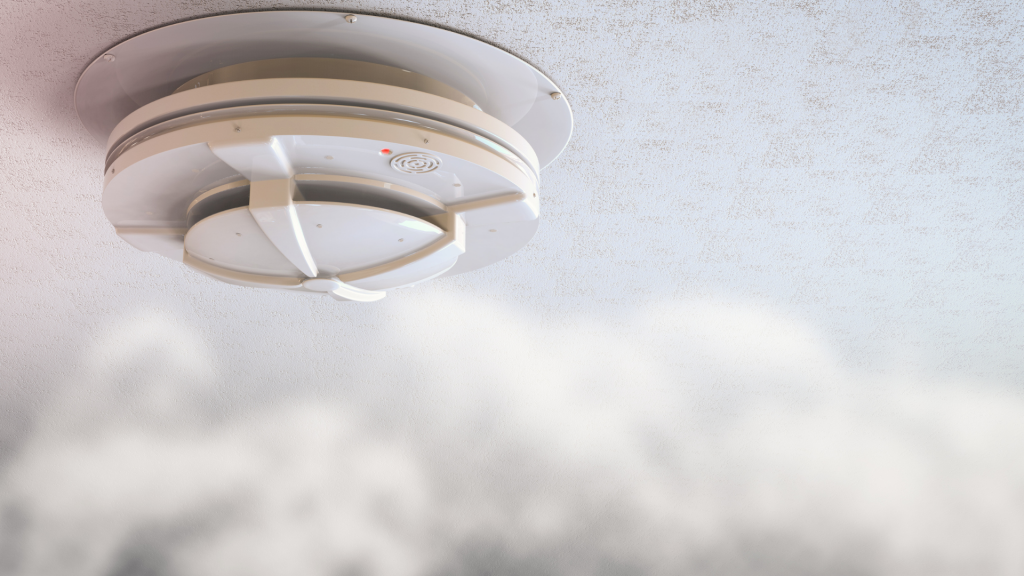
Check them regularly to ensure they function properly. A well-maintained smoke detector is the first line of defence in detecting fires early.


2. Electrical appliances

Regularly check electrical cords for wear and tear, do not use damaged or frayed electrical cords. Unplug appliances when not in use and avoid overloading plug sockets and always remember to turn off the iron or hair straighteners before you go out.


3. Create a cooking safety routine

Never leave cooking food unattended. If a grease fire occurs, avoid using water—smother the fire with a lid or fire blanket instead.


4. Smoking

If you smoke, do so outside away from soft furnishings and use deep, sturdy ashtrays to dispose of cigarettes safely.


5. Proper storage of flammable materials

Keep flammable liquids like gasoline or cleaning agents in well-ventilated areas and away from heat sources.


6. Children

Teach your children about the dangers of playing with fire and keep matches and lighters out of their reach.


Electrical Safety

Electricity is part of our lives. We use it from the moment we wake up and throughout the day. As a result, we sometimes forget how powerful and dangerous it can be.

The number one cause of electrical problems at home is the misuse of electrical equipment. Keep an eye on your appliances on a day-to-day basis and immediately stop using anything that looks damaged. You don’t need to be an electrician to do basic checks – checking the wires, keeping them away from water and not overloading sockets are simple things you can do in your home to keep things safe.

Follow our top tips to avoid dangers in your home:

  • Turn off electrical appliances when you’ve finished using them
  • Check cables – if anything looks worn or loose, don’t use the item
  • Don’t let the leads from your kettle, toaster or other kitchen appliances trail across your cooker
  • If you see burn marks, sparks or your sockets feel hot call an electrician if you own the property or your letting agent if you rent your property
  • Test your smoke alarm on a regular basis, just in case there’s an electrical fire
  • Never use a bulb with a higher wattage than the light fitting says is safe
  • Don’t run the cables from your appliances under carpets or rugs
  • Never overload your sockets or adapters by plugging too many appliances into one place
  • Defrost your fridge and freezer at least once a year
  • Don’t leave your washing machine or tumble dryer on when you’re out of the house or overnight
  • Check that your microwaves, fridges and freezers have enough space around them
  • Never use water to put out an electrical fire! Visit fire safety page for more information

You can find even more electrical safety advice on the electrical safety council’s website.

Legionnaires’ Disease

Legionnaires’ disease is a lung infection you can get from inhaling droplets of water from things like air conditioning or hot tubs. It’s uncommon but it can be very serious.


How you get Legionnaires’ disease

You can get Legionnaires’ disease if you breathe in tiny droplets of water containing bacteria that cause the infection.

It’s usually caught in places like hotels, hospitals or offices where the bacteria have got into the water supply. It’s less common to catch it at home.

You can get Legionnaires’ disease from things like:

  • air conditioning systems
  • humidifiers
  • spa pools and hot tubs
  • taps and showers that are not used often

You cannot usually get it from:

  • drinking water that contains the bacteria
  • other people with the infection
  • places like ponds, lakes and rivers


Check if you have Legionnaires’ disease

Symptoms of Legionnaires’ disease include:

  • a cough
  • shortness of breath
  • chest pain or discomfort, particularly when breathing or coughing
  • a high temperature
  • flu-like symptoms


Urgent advice:Ask for an urgent GP appointment or get help from NHS 111 if:

You have symptoms of Legionnaires’ disease such as:

  • a cough that’s lasted 3 weeks or more
  • coughing up blood
  • chest pain that comes and goes, or happens when breathing or coughing
  • feeling short of breath

Tell them where you’ve been in the last 10 days, such as if you stayed in a hotel, spa or hospital.

You can call 111 or get help from 111 online.


Treatment for Legionnaires disease:

You may need to go into hospital if you’re diagnosed with Legionnaires’ disease.

Treatment in hospital may include:

  • antibiotics given directly into a vein
  • oxygen through a face mask or tubes in your nose
  • a machine to help you breathe

When you start to get better you might be able to take antibiotic tablets at home. Antibiotic treatment usually lasts 1 to 3 weeks.

Most people make a full recovery, but it might take a few weeks to feel back to normal.

Read more: https://www.nhs.uk/conditions/legionnaires-disease/

Slips, Trips, and Falls

What are Slips, Trips, and Falls?

Slips, trips, and falls are among the most common hazards in the workplace. They put many workers at risk of sprains, strains, cuts, bruises, fractures, and other injuries. At worst, they can also lead to death, especially in high-risk occupations such as construction. However, with adequate training and safety practices, companies can keep their personnel safe from these hazards.

For context, slips occur when there’s little to no traction between the footwear and the walking surface, causing a person to lose their balance. On the other hand, tripping happens when a person’s foot hits an object or steps down to a lower, uneven surface. Any of the two can disrupt a person’s balance and make them lose their footing.

Lastly, falls (being the leading cause of fatalities among construction workers) can happen to anyone if they stumble and fall too far off their center balance. This commonly occurs for those working at heights.

Slips, Trips, and Falls in Numbers

The US Bureau of Labor Statistics (BLS) reports alarming rates of slip, trip, and fall incidents in 2022. Their most recent data show that slips, trips, and falls are among the top causes of fatal and non-fatal injuries in the workplace:

  • Fatal Injuries – The rate of work-related fatalities caused by slips, trips, and falls was up by 1.8% in 2022 (equating to 865 cases).
  • Non-Fatal Injuries – Slips, trips, and falls cases ranked third among the top employer-reported workplace injuries in 2022, involving days away from work.


Common Causes and Risk Factors

Slips, trips, and falls can happen due to many reasons—from uneven working surfaces to unsafe ladder positions. Knowing the causes can help managers assess risk factors and devise ways to prevent them.

Here are the causes and risk factors for each:

Slips

  • Wet spills (e.g., water, mud, grease, oil, food, blood, etc.)
  • Dry product spills (e.g., powder, dust, wood chips, granules, plastic wraps)
  • Weather hazards (e.g., ice, snow)
  • Concrete, ceramic tile, or marble floors
  • Sloped or uneven walking surfaces
  • Wet, muddy, greasy shoes
  • Ramps or planks without skid- or slip-resistant surfaces
  • Climbing ladders

Trips

  • Clutter on the floor
  • Obstructed view
  • Poor lighting
  • Uncovered cables, wires, hoses, and extension cords
  • Open drawers, cabinets, doors, etc.
  • Uneven walkways
  • Unmarked steps or ramps
  • Missing floor tiles and bricks

Falls

  • Weak or damaged ladders
  • Ledges without proper railing
  • Carrying heavy objects
  • Failure to use guardrails on scaffolding
  • Unprotected edges
  • Unsafely positioned ladders
  • Misused fall protection and height access equipment


Slips, Trips, and Falls Hazards

To give you a comprehensive idea, here’s a list of the most frequently occurring injuries associated with slips, trips, and falls hazards:

  • Sprains and strains – When a person slips or trips and tries to catch themselves or regain balance, they may twist or stretch their muscles or ligaments, leading to sprains or strains.
  • Fractures and broken bones – Falling from a height or landing forcefully on a hard surface can cause fractures or breaks in bones of the wrists, hips, and ankles.
  • Contusions and bruises – Impacts with the ground or objects during a fall can cause contusions, commonly known as bruises, from damaged blood vessels beneath the skin.
  • Head injuries – Falls that involve striking the head on a hard surface can cause traumatic brain injuries (TBIs), which can range from mild concussions to more severe cases.
  • Cuts and lacerations – Falls may involve contact with sharp or rough objects, leading to cuts and lacerations.
  • Back and spinal cord injuries (SCI) – Falls that involve landing on the back or experiencing a jarring impact can cause damage to the spine, such as herniated discs, spinal fractures, or spinal cord injuries.
  • Neck injuries – These are sometimes a result of spinal injuries or damage to the muscles, ligaments, or tendons in the neck.

OSHA Regulations

The Occupational Safety and Health Standards 1910 Subpart D (Walking-Working Surfaces) provides general standards for walking-working surfaces, such as passageways, warehouses, storage rooms, service rooms, and working areas.

The 1910.22 Regulations outline several points for safe working surfaces, including the following:

  • Keep workroom floors clean, orderly, and dry.
  • Provide safe means of entering and exiting from walking surfaces.
  • Inspect the working surface to keep it in good condition.
  • Repair hazardous floors as soon as possible.

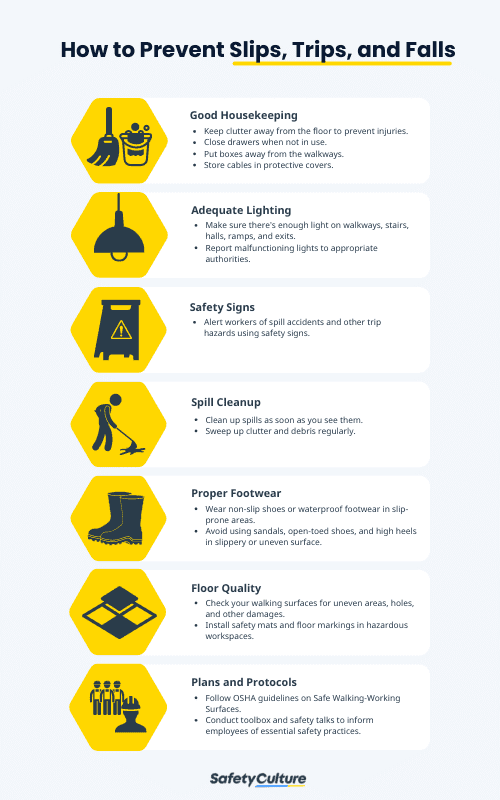
7 Tips for Preventing Slips, Trips, and Falls

Fortunately, most slip, trip, and fall incidents are avoidable. By using the right safety tools and training employees, companies can prevent these incidents from happening. Here are some ways to prevent slips, trips, and falls in the workplace:


How to Prevent Slips Trips and Falls in the Workplace

  1. Practicing good housekeeping – A slip-free workspace begins with housekeeping. Removing clutter helps tidy up the floor and makes it walkable for everyone in the workplace.
  2. Providing adequate lighting in walking areas – Workers can navigate through spaces better if there is enough light. Given this, it’s best to place proper lighting in access and egress points such as halls, ramps, stairs, and exits.
  3. Installing safety signs – Doing so warns people about walking in hazardous spaces to keep them safe. For example, construction safety uses warning lines, control zones, and designated areas to mark which areas are passable or restricted.
  4. Cleaning spills immediately – Proper cleaning ensures that the floor is free from hazardous elements so that people can walk safely. To keep water from the floor, you may also consider various dewatering methods and equipment such as a sump pump.
  5. Making sure proper footwear is worn – Non-slip shoes with good traction protect workers from static electricity, falling objects, explosions, exposure to hazardous substances, and other risks.
  6. Maintaining and improving floor quality – Modifying the floor space can go a long way to ensure safety from slips, trips, and falls. Fall protection can be improved by inspecting floors regularly and investing in non-slippery flooring options, among others.
  7. Implementing safety plans and protocols – A well-thought-out safety plan cements all efforts in promoting fall protection, especially in high-risk workspaces. This plan must include in-depth risk assessments, safety standards and practices, training, regular inspections, equipment guidelines, and toolbox talks.


Read more: https://safetyculture.com/topics/slips-trips-and-falls/